Deepak Shukla • May 8, 2026
Why Traditional Education Doesn’t Really Prepare You for Digital Business
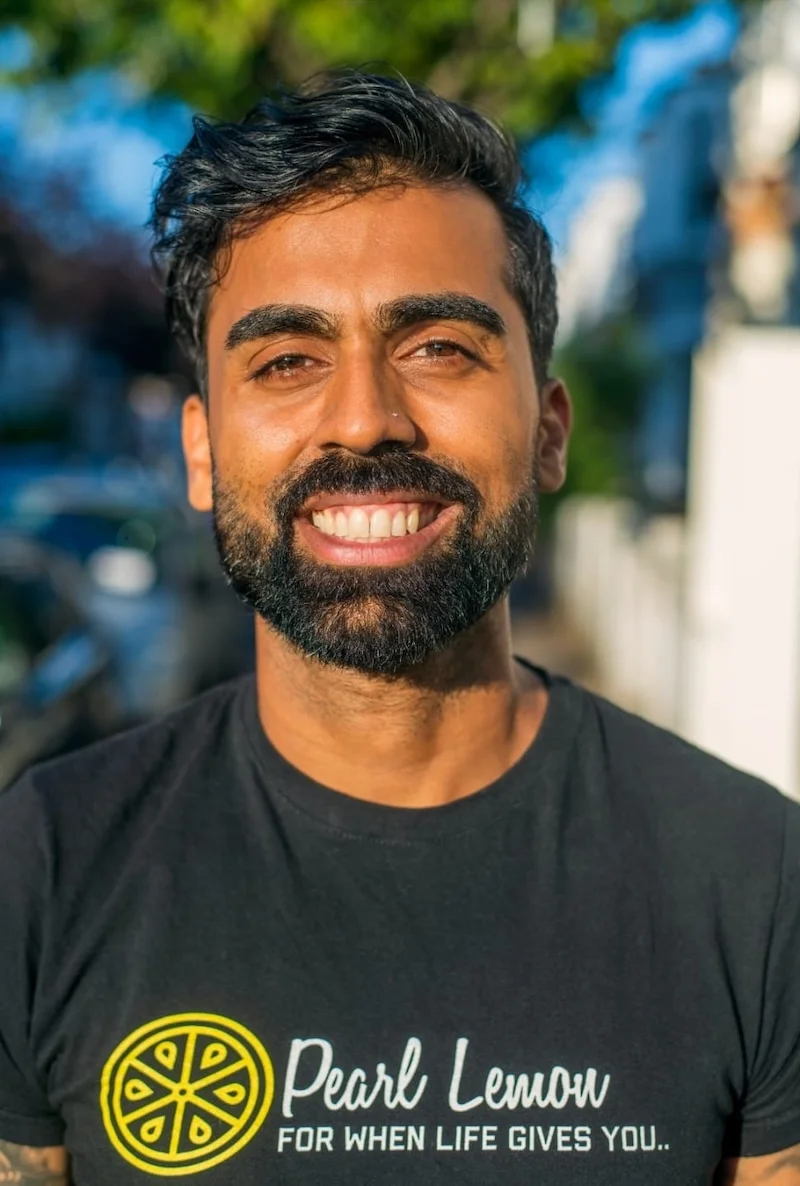
Author: Deepak Shukla | Pearl Lemon Group
Deepak Shukla is the founder and CEO of the Pearl Lemon Group, based in London, UK, with divisions in digital marketing, PR, social media marketing, and AI strategy.
Deepak Shukla on LinkedIn
 Deepak Shukla on LinkedIn
For years, education followed a fairly predictable path. You learn the theory, sit exams, collect a qualification, and then, at some point, you’re supposed to go out and use all of that in the real world. Back when industries moved slowly and career paths were more linear, it made sense.
Then digital business came along and kind of broke that rhythm.
Now everything moves faster than any syllabus could keep up with. Tools evolve, platforms shift and strategies that worked a few months ago can quietly stop working overnight. Meanwhile, education still leans heavily on theory.
At Pearl Lemon, a lot of our top performers didn’t follow the usual academic path. They learned by doing: running campaigns, testing ideas, messing things up, fixing them, repeating the loop. It’s less tidy, sure but far more effective.
The point isn’t that education is useless. It just hasn’t caught up.
The Speed Problem
Traditional courses are designed for stability. Planned months ahead, reviewed, approved, polished. By the time students see them, parts of the content can already feel a bit stale. Digital markets don’t wait.
• New platforms appear seemingly overnight
• Algorithms change with little warning
• Trends rise and vanish before you’ve even noticed
Students are taught to rely on fixed knowledge. The market rewards people who can react, adjust and improvise. Memorisation helps but adaptability wins.
Knowing Something Isn’t the Same as Doing It
Education often focuses on understanding concepts. Think frameworks, models and strategies, neatly packaged so they make sense in theory. On paper, it works.
In practice, execution is messier. Campaigns don’t follow neat structures. Results can be unpredictable. Things break, data is incomplete and decisions still have to happen.
Even someone who understands marketing theory inside out can struggle to run something that actually delivers. That’s because execution is different:
• Testing ideas in real conditions
• Adjusting when things don’t land
•
• Making calls without the full picture
Theory tells you what should work. Real work shows you what actually does.
Decision Making When You’re Not Sure
Education rarely trains people to make decisions when there’s no clear answer.
In school, problems are structured, outcomes are defined, and there’s usually a “correct” solution. Digital business? Not so much.
• You may have to pick between strategies with no clear winner
• Sometimes you act with incomplete data and a ticking clock
• Often, you just make the call and deal with the outcome
It takes judgment. Evaluating risk, prioritising and adapting isn’t something a textbook can teach. You pick it up by doing, failing and figuring out why.

Pitch your campaign to 700+ business journalists. PR ON THE GO provides you with a spreadsheet database of over 700 international business and marketing media editorial contacts to distribute your news independently.
Get the PR ON THE GO Global Business+Marketing Media List here
Why Real Campaigns Teach Faster
Feedback in real campaigns is immediate. Something works? You see it. Something fails? That’s obvious too. There’s no waiting around for grades or delayed responses.
Digital environments are unforgiving in that way. Everything is trackable, from engagement and conversions to behaviour. Every action informs the next one. You adjust, tweak, repeat.
The learning cycle gets compressed. A lot.
Credentials vs. Results
Education emphasises credentials: degrees, certifications, formal signals of knowledge. They matter and show commitment.
But in digital business:
• Results matter more than credentials
• Clients care about what you’ve done, not what you’ve studied
• A portfolio of real campaigns often speaks louder than a list of qualifications
Proof beats theory in performance-driven environments.
The Gap Between Learning and Earning
Many graduates leave school with knowledge but no clear way to apply it commercially.
Digital business is outcome-driven. It includes leads, sales, growth and measurable results. Without experience delivering these outcomes, the leap from learning to earning is tricky.
This is why side projects, internships, or self-directed experiments exist. Not glamorous, but they bridge the gap. Because knowing something isn’t the same as making it work.
Self-Education Is Filling the Gaps
As traditional systems lag, self-education has stepped in. Online resources, communities and hands-on experimentation. It lets you learn at your own pace and focus on what matters.
It encourages:
• Curiosity
• Initiative
• Continuous improvement
But it’s not perfect. Without structure, it’s easy to just consume information without applying it. Watching, reading and saving for later feels productive, but often doesn’t stick. The real value comes when learning meets action.
Context Matters
Digital skills aren’t plug-and-play. Understanding when and why to use a tool is what counts.
• What works in one industry might flop in another
• Tactics that resonate with one audience might fall flat with another
Education tends to separate knowledge from context. In reality, they’re inseparable.
Feedback, Iteration and Getting Better
Improvement comes from iteration. Education rarely supports this loop. Assignments are often one-and-done. Feedback comes late. Real work, however, keeps you in the loop. Every campaign teaches something. Every result informs the next move.
Failure Is Data
In school, failure hurts grades. In digital business, failure is part of the process. Not every idea works, and that’s fine.
These failures are data. They show what doesn’t land, what to adjust, and where assumptions went wrong. Pay attention, and failure speeds up learning.
Exposure Beats Instruction
You can’t learn everything from lessons. Live projects, client work and market observation. They teach patterns you won’t get in a classroom. Intuition develops, decisions get sharper.
Experience shapes understanding in ways instruction can’t replicate.
Adaptability Is Key
Digital business rewards flexibility. Trends change. Platforms evolve. Strategies shift.
Education favours stability. People who adjust quickly, even imperfectly, tend to succeed. Adaptability builds resilience in unpredictable environments.
So What Does This Mean?
The gap between education and digital business isn’t closing soon. Individuals have to take charge of learning: combining foundational knowledge with hands-on experience, testing ideas, getting feedback and figuring things out as they go.
Education still matters. It builds discipline and foundational thinking. But on its own, it’s not enough.
In the end, it’s not about how much you know. It’s about what you can actually do with it. And in digital business, things are rarely straightforward.
#PRontheGO
Subscribe to the PR ON THE GO newsletter.
Receive the latest media news in your inbox. Discover journalists and start pitching!