PR ON THE GO • November 4, 2026
Dimitri Logothetis: Making the Movie Is the Creative Business. Owning the IP Is the Real Business.
Filmmaker and entrepreneur Dimitri Logothetis on why the future of independent entertainment is not simply producing films — it is controlling recognizable intellectual property and expanding it across movies, animation, gaming and new media.
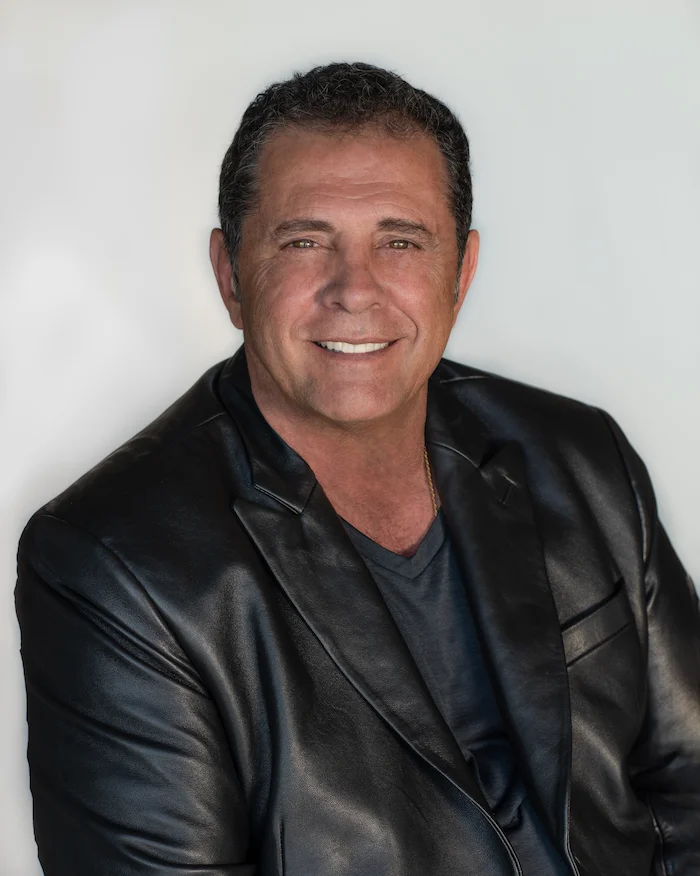
 dimitrilogothetis.com
 @dimitrisite
For most filmmakers, success traditionally meant getting the next directing job.
For writer, producer and director Dimitri Logothetis, years of independent filmmaking taught him a different lesson:
Making the movie is the creative business. Owning the intellectual property is the real business.
“There is an enormous difference between being hired to make somebody else’s intellectual property and controlling a recognized, worldwide property that has continuing value,” Logothetis says.
He learned that lesson through Kickboxer, the martial-arts property that became part of international pop culture after the original 1989 film starring Jean-Claude Van Damme. Rather than simply revisiting the original movie, Logothetis helped rebuild the property by writing, producing and directing for a new generation with Kickboxer: Vengeance and Kickboxer: Retaliation. Van Damme returned to the franchise, this time as a mentor, alongside Alain Moussi and an unusual collection of genuine combat-sports stars, including Dave Bautista, Georges St-Pierre, Gina Carano and Mike Tyson.
But Logothetis says the most important lesson wasn't simply how to make another successful martial-arts movie. It was understanding the value of the underlying brand. “Owning intellectual property was one of the most important lessons I learned as a filmmaker,” he says. “Creative people sometimes become so focused on the creative side that they forget the word ‘business’ in show business. Understand ownership. Understand rights. Understand the value of what you control.”
Kickboxer: Retaliation trailer
One Brand. Multiple Businesses.
Two Kickboxer reboot films are already in the marketplace and another feature is in development.
But Logothetis no longer sees the franchise simply as a succession of feature films. He sees an entertainment asset.
“I control rights in the Kickboxer franchise, and I’m looking beyond traditional feature films into animation, gaming and short-form storytelling,” he says. “A story world can live across multiple forms of entertainment simultaneously.”
That changes the economics — and potentially the lifespan — of entertainment intellectual property.
The traditional model might produce a sequel every few years. The emerging model allows a recognized brand to reach different audiences through multiple formats. A feature film can coexist with an animated property. An animated universe can expand into a video game.
Short-form vertical storytelling can introduce the brand to younger audiences who may never have seen the original films. Each platform can reinforce the others. In business terms, Logothetis believes the question changes from “What is our next movie?” to “What can this intellectual property become?”
Recognition Is an Asset
There is another reason Logothetis believes established entertainment properties deserve a second look.
Consumer brand recognition is expensive. Studios and brands can spend hundreds of millions of dollars attempting to make audiences recognize a new title, character or entertainment universe.
An established property begins with something new intellectual property does not have: history.
“Recognition is incredibly expensive to create,” Logothetis says. “If something already has awareness and emotional attachment, the opportunity may be to reinvent it for a new generation rather than starting at zero.”
His advice to entertainment entrepreneurs is therefore simple: don't only look for the next new thing.
Look for the valuable thing everyone else has forgotten. “There are extraordinary brands, characters, books and entertainment properties that audiences already recognize but nobody is using intelligently,” he says.
“I experienced that firsthand with Kickboxer.” The objective, he stresses, is not nostalgia. It is reinvention.
A property that succeeded with audiences decades ago cannot simply be reproduced and expected to work again. New generations consume entertainment differently, and international audiences have become increasingly important. The brand provides the recognition.
The entrepreneur still has to create the reason for audiences to return.
A Filmmaker Is Also an Entrepreneur
Logothetis believes independent filmmaking taught him entrepreneurship almost by necessity.
“When you're making independent films, you're not only the filmmaker,” he says. “You're also an entrepreneur.”
Unlike a director working within a major studio infrastructure, an independent producer may be involved in virtually every stage of building the business around a film: developing the screenplay, attaching actors, raising financing, structuring production, managing budgets, securing distribution and marketing the finished product. “As a writer, producer and director, you're running several businesses at once,” he says.
His approach is built around momentum. “A finished screenplay can attract an actor. An actor can attract financing. Financing can create a movie. But an unfinished screenplay sitting on your computer can't do anything.” The same philosophy applies when things go wrong — which, in independent filmmaking, they inevitably do. Financing disappears. Actors become unavailable. Distribution changes. Projects that appeared ready to begin production can suddenly stop. Logothetis learned not to confuse the collapse of one strategy with the death of the underlying project.
“A failed plan is not necessarily a failed project.” If financing disappears, restructure the financing. If an actor leaves, reconsider the casting. If one distributor says no, look for another. “The important thing is to separate your ego from the problem,” he says. “Ask yourself whether there is another way to accomplish the objective. Usually there is.”
Proving the Brand Without a Studio Machine
That philosophy was particularly important in rebuilding Kickboxer. The franchise wasn't relaunched with the marketing and financial machinery of a major Hollywood studio behind it. It had to be rebuilt independently. That meant assembling financing, attracting recognizable talent, producing internationally and finding distribution — while proving that an audience still existed for a property whose first film had been released decades earlier.
The subsequent films demonstrated that Kickboxer could exist beyond its original era.
And that, Logothetis believes, is where the next phase becomes interesting.
Rather than asking audiences to return every few years for another film, the property can potentially remain active continuously across several entertainment categories.
Film. Animation. Gaming. Short-form entertainment.
Different products. Different audiences. One recognizable piece of intellectual property.
Beyond Kickboxer
Logothetis has applied the same independent approach to other productions. He wrote, directed and created the science-fiction martial-arts film Jiu Jitsu, starring Academy Award winner Nicolas Cage and international martial-arts star Tony Jaa.
His 2024 action film Gunner, starring Luke Hemsworth and Morgan Freeman, has subsequently received 48 independent film-festival awards internationally. For an independent film without the enormous global advertising budget available to a studio release, Logothetis sees recognition of that kind as another way of creating awareness. “You have to find ways to make people discover the product,” he says.
His next directing project also moves beyond conventional martial-arts territory.
Logothetis has written a European heist thriller designed to shoot across several countries. The story involves an extraordinary attempt to recover culturally significant treasures and return them to Greece.
For now, he is keeping both the title and the target secret.
Europe and the Independent Entertainment Opportunity
The European focus is not accidental. Logothetis, an American, was born in Greece and built much of his career in the United States. He increasingly sees entertainment as an international rather than purely Hollywood-centered business. Audiences are global. Financing can be international. Production can move between countries. And intellectual property can travel across both borders and media platforms.
That makes ownership even more significant. A filmmaker hired to direct a movie may receive a fee.
A producer who controls valuable intellectual property can potentially participate in the creation of an entire ecosystem around it. That distinction, Logothetis believes, should matter not only to filmmakers but to entrepreneurs and investors examining the rapidly changing entertainment industry.
The most valuable asset may not be the individual movie.
It may be the recognizable world behind it.
Kickboxer began as a low budget martial-arts film released in 1989. That film along with Enter the Dragon defined American martial arts action films, which which genre had been ignored by major studios up until that time.
Decades later, that name can potentially support live-action films, animation, gaming and new forms of short-form entertainment aimed at entirely different generations. For Logothetis, that is the fundamental business lesson. Don't simply make content. Build assets. Don't simply create a movie. Build a world.
And whenever possible:
Own the world you build.

Pitch your indie film project to 1,500+ film journalists. PR ON THE GO provides you with a spreadsheet containing over 1,500 film & entertainment journalists and film critics.
Get the PR ON THE GO International Film Media List here
#PRontheGO
Subscribe to the PR ON THE GO newsletter.
Receive the latest media news in your inbox. Discover journalists and start pitching!