PR ON THE GO • September 28, 2026
Meet Action Indie Filmmaker
Dimitri Logothetis
PR ON THE GO Indie Filmmaker Interview
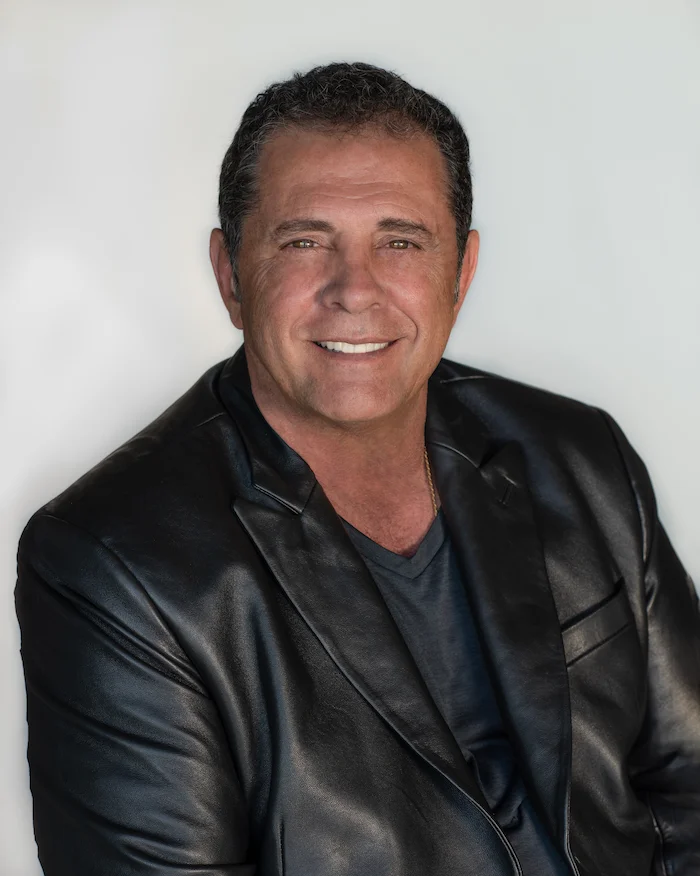
Dimitri Logothetis is a Los Angeles-based writer-director, whose latest film Gunner stars Luke Hemsworth and Morgan Freeman and has collected 48 international film festival awards, including the City of Angels Film Festival (2025) where he won “Best Action Film”.
Logothetis has spent much of his career making muscular independent action films with Hollywood stars and some of the world's most accomplished screen fighters.
He revived the Kickboxer franchise with Kickboxer: Vengeance and Kickboxer: Retaliation, which he wrote and directed, bringing Jean-Claude Van Damme back to the series alongside Alain Moussi, Dave Bautista, Georges St-Pierre, Gina Carano and Mike Tyson. A third installment is in the works.
For PR ON THE GO, Dimitri Logothetis shares his journey of finding his community and audience.
 dimitrilogothetis.com
 @dimitrisite
Gunner trailer
Kickboxer: Retaliation trailer
Kickboxer: Retaliation holds a 92% Rotten Tomatoes score and ranks 18th on FandomWire’s list of the 30 best martial-arts films. MovieWeb placed its prison fight seventh among the best single-shot martial-arts sequences, calling it “a showcase that never cuts away, capturing everything in one impressive take”.
You are widely known to work in independent action with actors who are accomplished martial artists. This attracted a wide martial arts fan audience. You yourself have a background in martial arts. How would you say that helped you developing single-shot martial-arts sequences like Kickboxer: Retaliation’s prison fight?
Dimitri Logothetis: My background in martial arts has been enormously important because I understand that a great fight scene isn't simply about throwing punches and kicks. It has to tell a story.
When you're working with extraordinary martial artists like Alain Moussi, Jean-Claude Van Damme, Georges St-Pierre, Gina Carano or Mike Tyson, you don't want to disguise what they can do with excessive editing. You want the audience to experience their physical ability.
That's one reason I wanted the prison fight in Kickboxer: Retaliation to play in a continuous shot. Alain had to actually perform it. The camera became the audience in the scene, moving with him from one opponent to another. It required tremendous preparation and choreography, because if somebody missed a beat, you couldn't simply hide it with a cut.
My martial arts experience gave me the confidence to let the action breathe. I know what a real strike looks like. I know how bodies move when they're exhausted. And I know martial-arts audiences are extremely sophisticated — they can tell when you're cheating.
For me, the best action isn't just spectacle. It reveals character.
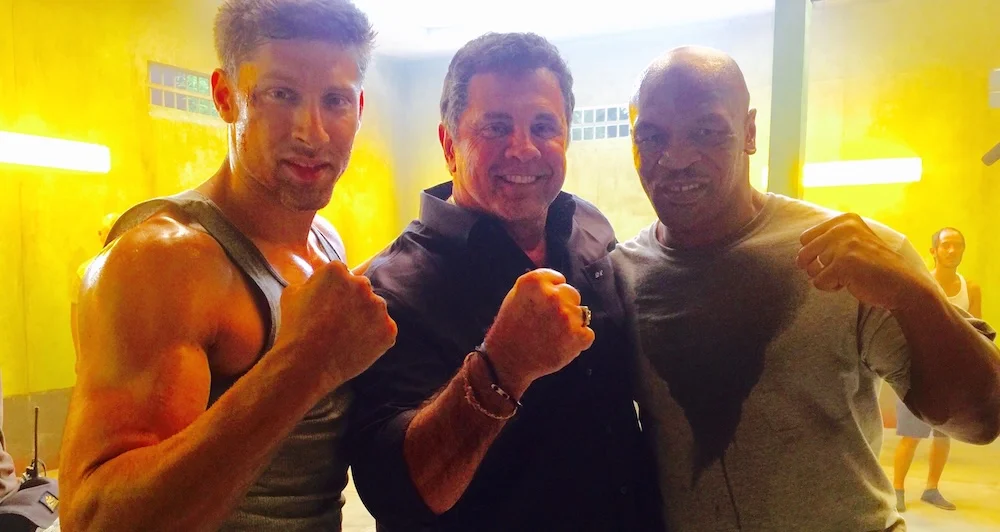
Without a studio, you wrote, produced and directed the Kickboxer reboot — Kickboxer: Vengeance and Kickboxer: Retaliation — bringing Jean-Claude Van Damme back as a fighting mentor alongside Alain Moussi and fighting world champions Dave Bautista, Georges St-Pierre, Gina Carano and Mike Tyson. Two films are out; a third Kickboxer is in the works. What does the cult classic and its continuation through you mean to you personally? How did you make it happen?
Dimitri Logothetis: Kickboxer means a great deal to me because I didn't just want to remake a movie. I wanted to protect something that had become part of martial-arts pop culture and introduce it to another generation.
The original film had an enormous following, and Jean-Claude Van Damme was obviously central to that. Bringing him back — but this time transforming him from the young fighter into the mentor — allowed us to respect the mythology while moving it forward.
Getting these movies made independently wasn't easy. There was no studio machine behind us. We had to raise the financing, put together the cast, secure distribution and convince people that there was still a worldwide audience for Kickboxer.
What ultimately made it possible was a new vision, my steadfast belief that the martial arts needed to stay authentic, persistence and the strength of the brand. Martial-arts fans hadn't forgotten Kickboxer. Once we had Jean-Claude, Alain Moussi and extraordinary athletes like Dave Bautista, Georges St-Pierre, Gina Carano and Mike Tyson involved, it became something much bigger.
I'm very proud that Retaliation was embraced so strongly by critics and audiences. I instilled the film with a sense of humor, which I was hoping would be embraced. But what excites me most is that Kickboxer still has room to evolve. I don't see it as nostalgia. I see it as an international action franchise that can continue reinventing itself.
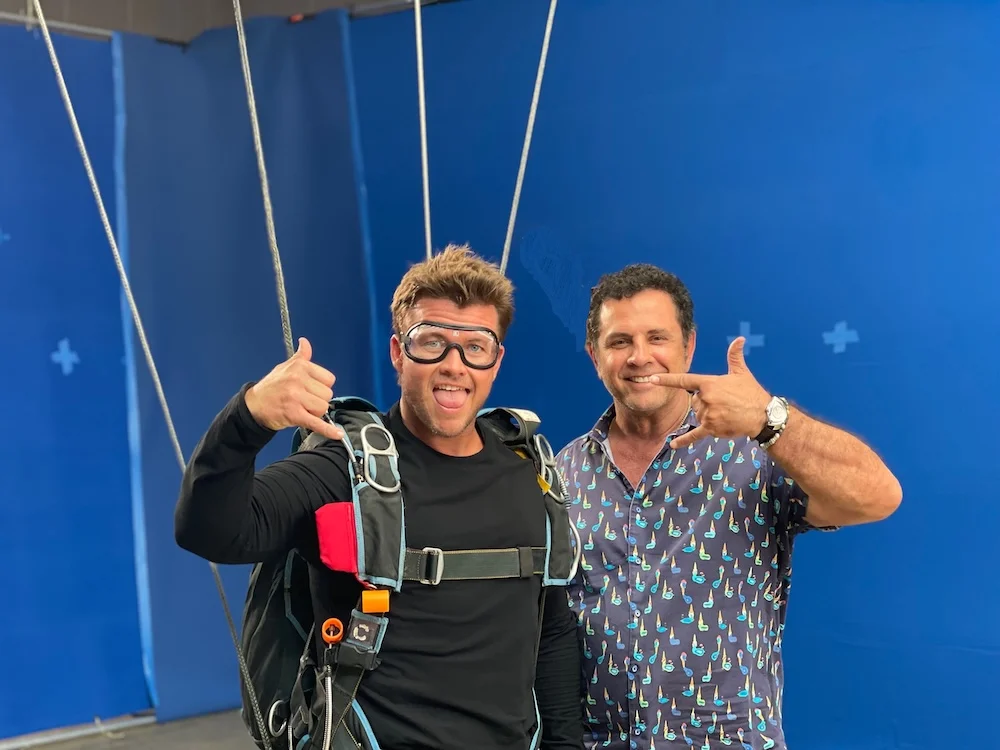
How do you balance filmmaking with networking, fundraising, and promoting your films?
Dimitri Logothetis: I don't think independent filmmakers really get to separate those jobs anymore.
When you're making independent films, you're not only the filmmaker. You're also an entrepreneur. On Monday I might be rewriting a screenplay. Tuesday I may be talking to an actor. Wednesday I'm speaking with my producing partners, investors or distributors. Thursday I'm discussing marketing. And Friday I'm back working on the movie.
I learned a long time ago that you can make a wonderful film, but if you can't finance it, package it, sell it and ultimately get people to discover it, nobody gets to see it.
Networking is important, but I don't particularly like the idea of networking simply for the sake of collecting contacts. I believe in building relationships. This business is surprisingly small, and people remember whether you delivered, whether you treated them well and whether you kept your word.
The creative and business sides of filmmaking aren't enemies. For an independent filmmaker, they have to work together.
Your latest feature, Gunner (2024), starring Luke Hemsworth as a former Special Forces soldier whose sons are abducted, and Morgan Freeman, has taken more than 40 festival awards. You were named Best Director at the London International Filmmakers Festival (2025), and again in Dublin, Tokyo, Hong Kong, Montreal, Palermo and Los Angeles. The film won Best Action at the City of Angels Film Festival and the San Diego International Film Awards, and Best Feature or Best Picture in Prague, Florence, Oslo, Vancouver and New York. Hemsworth won Best Feature Actor at FirstGlance Film Festival Los Angeles; Freeman won Best Actor at the Los Angeles Movie & Music Video Awards. What's your personal experience with film festival awards - How does that help the visibility of your independent film work?
Dimitri Logothetis: What's happened with Gunner has been incredibly gratifying. The film has now received 48 independent film festival awards internationally, and what has surprised me most is how geographically diverse the recognition has been.
When a film is being recognized in London, Dublin, Tokyo, Hong Kong, Montreal, Palermo, Prague, Florence, Oslo, Vancouver, New York and Los Angeles, it tells you that something in the film is crossing cultural boundaries.
Awards don't magically make an independent film successful, but they do something extremely valuable: they give the film another life.
Independent movies don't have the hundreds of millions of dollars in marketing that major studio pictures sometimes have. Festival recognition becomes another way of saying to an audience, “People have discovered this movie and believe it's worth watching.”
I'm also particularly pleased when the recognition is spread across the filmmaking. Luke Hemsworth being recognized for his performance, Morgan Freeman being recognized, and awards for directing, action and the film itself tell me audiences are responding to more than one element.
As an independent filmmaker, every one of those laurels represents another group of people somewhere in the world discovering your work. That's tremendously satisfying.
How do you make sure that viewers find your movie in a relentless sea of other releases?
Dimitri Logothetis: That's probably one of the greatest challenges filmmakers face today. We have more ways to reach an audience than at any point in history — and simultaneously more competition for that audience's attention than ever before.
I believe you have to give people a reason to stop scrolling.
Sometimes that's a star like Morgan Freeman or Luke Hemsworth. Sometimes it's Jean-Claude Van Damme returning to Kickboxer. Sometimes it's an extraordinary fight sequence people start sharing online. Sometimes it's festival recognition.
But underneath all of that, there has to be a good story, and characters which you care about, and a clear idea that an audience can understand very quickly.
I've become increasingly interested in building communities around films rather than simply advertising films to people. Kickboxer taught me that. Martial-arts fans around the world didn't just watch those movies; they discussed the fights, the fighters and the franchise. They became part of the life of the films. But with Kickboxer Retaliation we crossed over out of simply the martial arts fan into action film fans themselves.
Independent filmmakers can't always outspend the studios. But we can sometimes out-connect them. If you find the people who genuinely care about what you've made, they become your ambassadors.
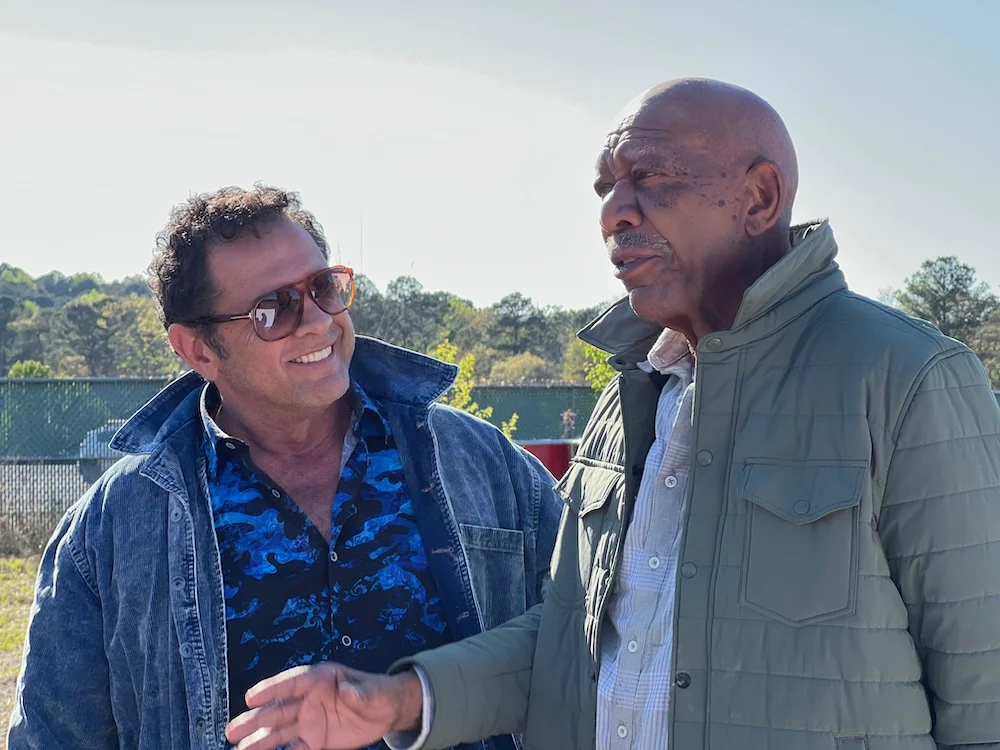
Lastly, for our audience of independent creatives, lots of them in the film industry, what has helped you grow in the film industry the most?
Dimitri Logothetis: Talent matters. Relationships matter. Luck matters. But filmmaking is a profession where you're going to hear “no” far more often than you hear “yes.”
I've had movies fall apart. I've had financing disappear. I've had actors become unavailable and distribution situations change. Every filmmaker who stays in this business long enough has those stories.
The important thing I've learned is not to allow somebody else's “no” to become your definition of what's possible.
And keep creating. Don't spend your entire career waiting for somebody to give you permission to become a filmmaker. Write the screenplay. Shoot something. Find collaborators. Put together the financing. Find your audience.
My career has never followed a straight line, and I don't think most interesting careers do.
The greatest lesson for me has been this: Never take no for an answer, build relationships, keep adapting, and keep moving forward.
Because ultimately, the filmmakers who survive aren't necessarily the ones who never get knocked down. They're the ones who keep getting back up.
Thank you!

Pitch your indie film project to 1,500+ film journalists. PR ON THE GO provides you with a spreadsheet containing over 1,500 film & entertainment journalists and film critics.
Get the PR ON THE GO International Film Media List here
#PRontheGO
Subscribe to the PR ON THE GO newsletter.
Receive the latest media news in your inbox. Discover journalists and start pitching!